
 Arabic
 English
 French
 Indonesia
 Russian
 Spanish
 Vietnamese
 +86-157-2476-6919
How to Verify Chinese Mining Chemicals Suppliers Online (and Avoid Scams)
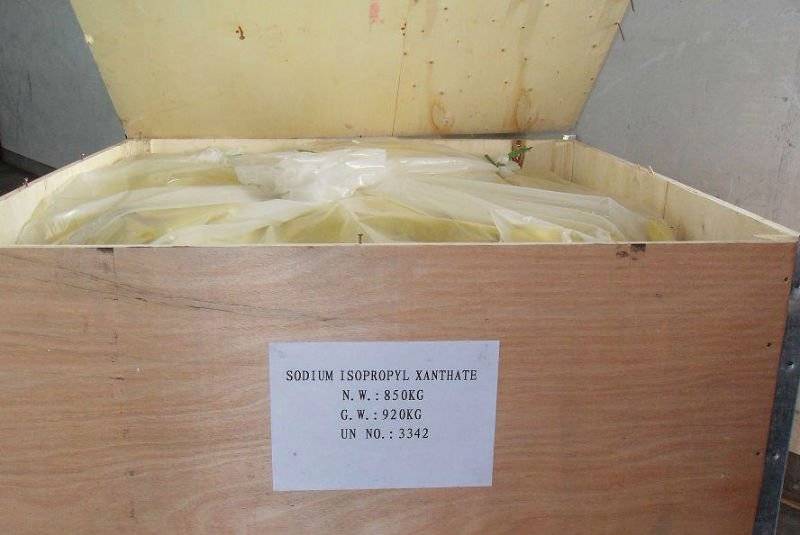
Millions Lost To Fake Mining Chemicals Suppliers in China (You Can Avoid This)
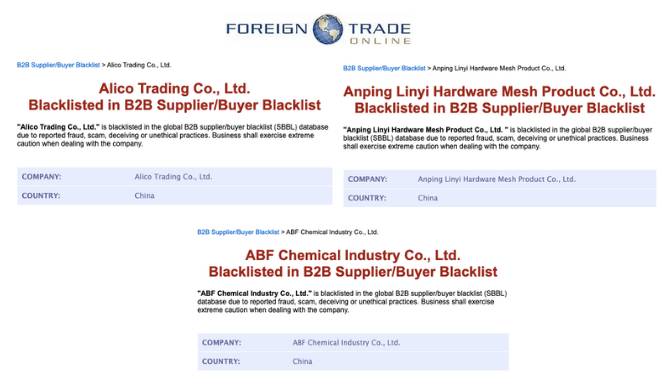
(Each year, chemical buyers lose millions to scam Chinese suppliers like these blacklisted here. Source: www.foreign-trade.com)
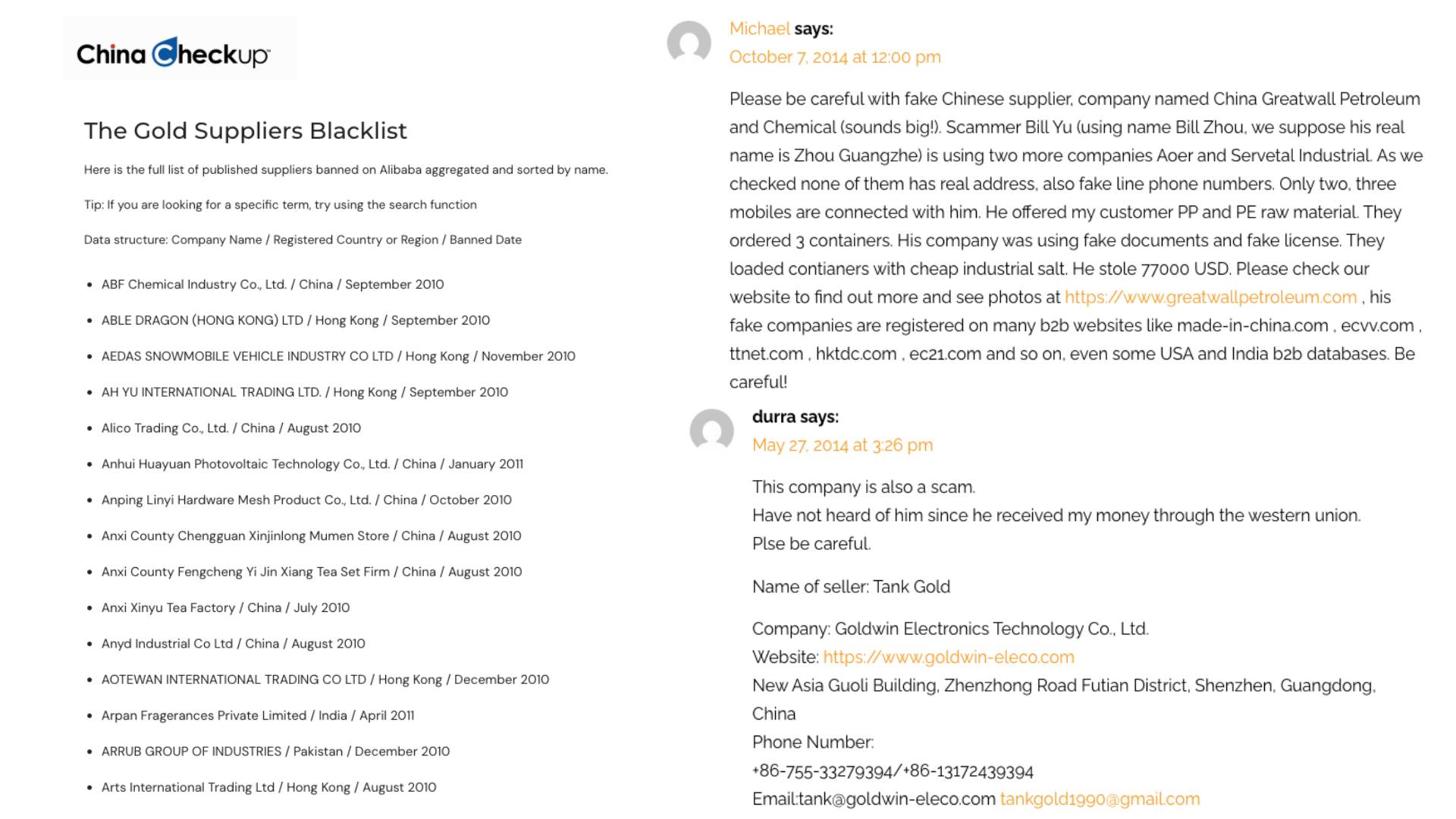
(These complaints show how fake Chinese suppliers steal money and run away. Source: www.chinacheckup.com)
Every year, mining companies lose thousands of dollars to fake Chinese suppliers. The pattern is always the same: attractive prices, professional websites, quick responses—then your money disappears and no chemicals arrive.
If you buy mining chemicals from China, you have the same problem. How do you know if suppliers are real or fake when you can't visit them? This is risky. Fake suppliers can:
- Steal your money
- Ruin your business
- Get you in trouble with fines
Chinese mining chemical suppliers can provide quality products that meet your needs. High quality chemicals help your mining operations run smoothly and safely. But if you don't check suppliers first, you might get bad products that damage your equipment or cause safety problems.
Are you looking for new mining chemical suppliers from China? This guide shows you exactly how to verify Chinese mining chemicals suppliers from your office.
What You'll Learn in This Complete Guide
Part 1: Know Your Enemy
- Why fake suppliers are hard to spot
- Quick initial checks to identify fakes
Part 2: Know Your Supplier
- Factories vs Traders vs Agents
- Different verification for each type
Part 3: Smart Verification System
- 6-part verification process
- Red flags to look for
Part 4: Take Action
- Final words
- A smart solution
After reading this guide, you'll know how to find reliable mining chemicals suppliers from your desk.
Part 1: Know Your Enemy
Why Fake Chinese Suppliers Are Hard to Spot
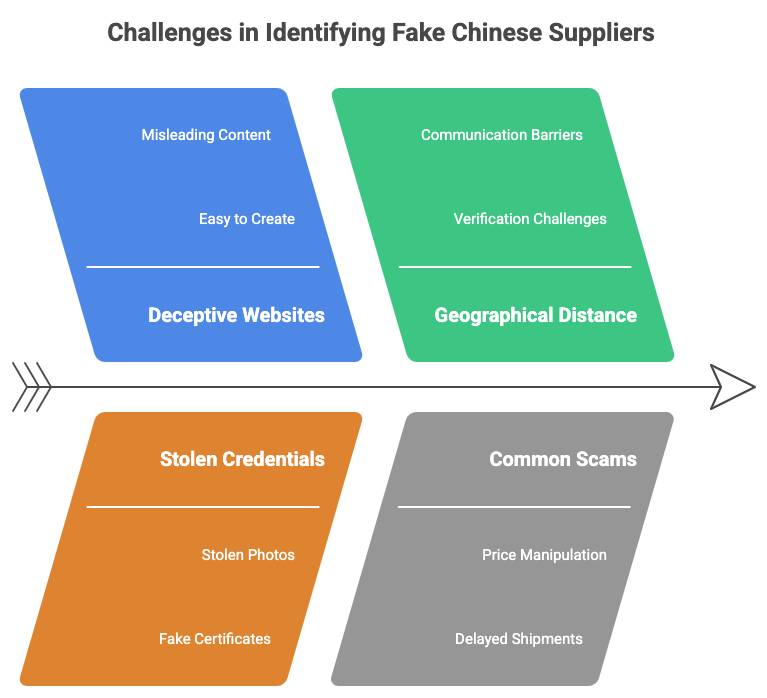
(Scammers use fake websites, stolen photos, and low prices to trick buyers.)
Professional Websites Are Easy to Fake
Scammers build convincing websites in days using professional templates, and copied text from real companies. They create fake contact forms and use stolen company information. A nice website doesn't prove the company is real.
Stolen Photos and Fake Certificates
Fake suppliers steal factory photos, equipment pictures, and certificates from legitimate companies. They copy worker photos, building images, and quality certificates with real stamps. Using stock photos doesn’t necessarily mean they are scammers, using only stock photos throughout their website is problematic. Always ask for photos showing their company name clearly visible.
Distance Makes Verification Harder
You can't visit factories in person, time zones make calls difficult, and language barriers cause confusion. Scammers exploit this distance by knowing you won't fly to China to verify them. Use video calls and online verification tools instead.
Common Scammer Tricks
Fake suppliers copy real company information, use stolen business registration numbers, create fake employee profiles, and offer prices too good to be true. They rush buyers into quick decisions and create fake customer testimonials.
5-Minute Initial Screening (Do This First)
(Don’t get scammed: legit suppliers have verifiable contacts, social proof, and real domains.)
Before spending time on detailed verification, check these basics:
✓ Professional contact details - Physical address and local phone number (not just mobile)
✓ Business email domain - [email protected] (not Gmail/Yahoo)
✓ Clean website - Professional design with proper spelling and grammar
✓ Social media presence - Active LinkedIn or industry platform profiles
✓ Reasonable prices - Not suspiciously lower than market rates
Red Flag: If they fail 2 or more checks, move on to other suppliers.
WhatsApp Us for Free a Consultation
Part 2: Know Your Supplier
Understanding Different Types of Chinese Suppliers
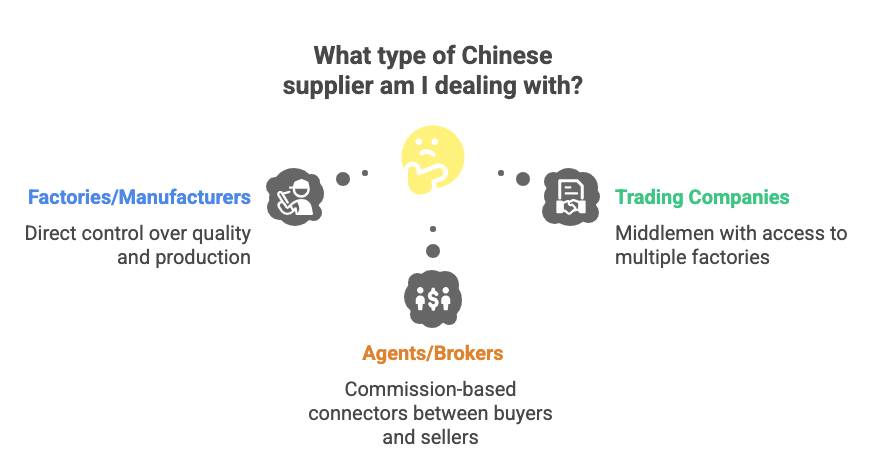
(Factory, trader, or agent? Each mining chemicals supplier type needs different checks. Know who you're dealing with.)
- Factories make the chemicals themselves. They should show you production equipment and explain manufacturing processes.
- Trading Companies buy from factories and resell. They should reveal their supplier network and show warehouse facilities.
- Agents connect you with suppliers for commission. They should provide clear contracts and supplier introductions.
Important: Each type requires different verification questions. Make sure you understand your supplier type and look for relevant checks.
Warning Signs of Fake Suppliers (For Each Supplier Type)
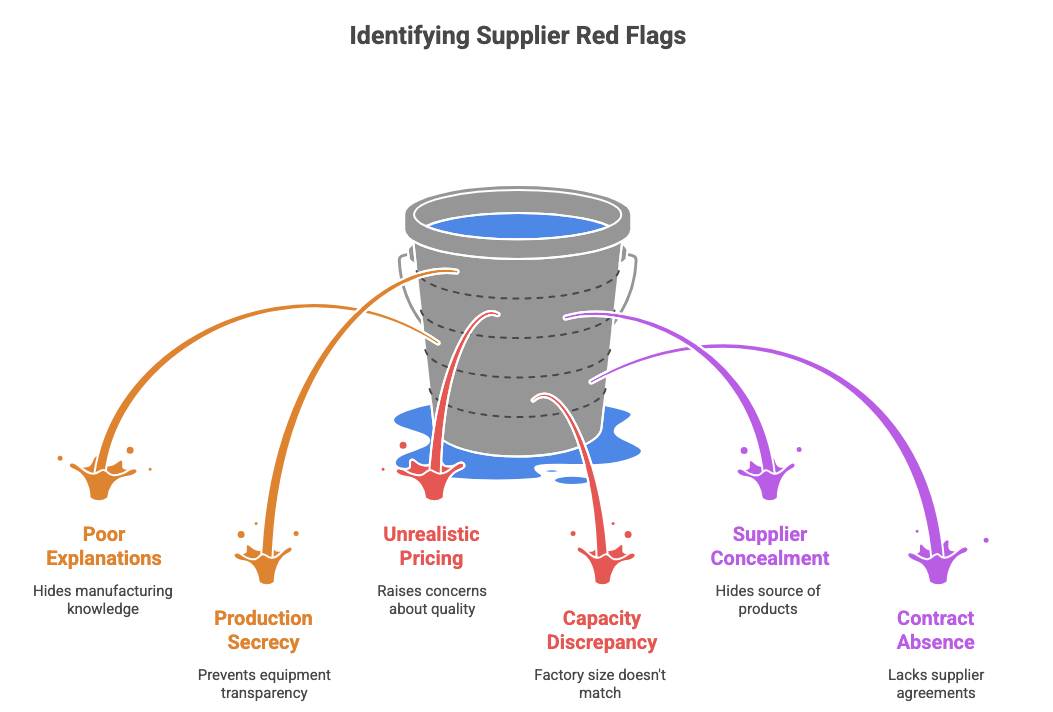
(If your mining chemicals supplier does this—walk away. These red flags can cost you everything.)
Factory Red Flags:
- Can't explain manufacturing process
- Won't show production equipment
- Prices much lower than other factories
- Claims huge capacity but small factory
Trader Red Flags:
- Won't reveal their suppliers
- Can't provide supplier contracts
- Claims to manufacture (when they don't)
- No proper trading licenses
General Red Flags:
- Pressure for immediate payment
- Only accepts wire transfers
- No proper business address
- Poor English in official documents
Part 3: Smart Verification System
1. Initial Research (Before Contact)
Step 1: Online Background Check
- Search their company name on China's National Enterprise Credit System (gsxt.gov.cn)
- Verify business registration matches what they claim to sell
- Check registration address exists and is legitimate
- Look up export licenses at english.customs.gov.cn (for all suppliers)
Red Flags at This Stage:
- No business registration found
- Business scope doesn't match their products
- Fake address or PO box only
2. First Contact & Questions
Step 2: Determine Supplier Type
Ask: "Are you a factory/manufacturer or a trading company?"
Step 3: Ask Type-Specific Questions
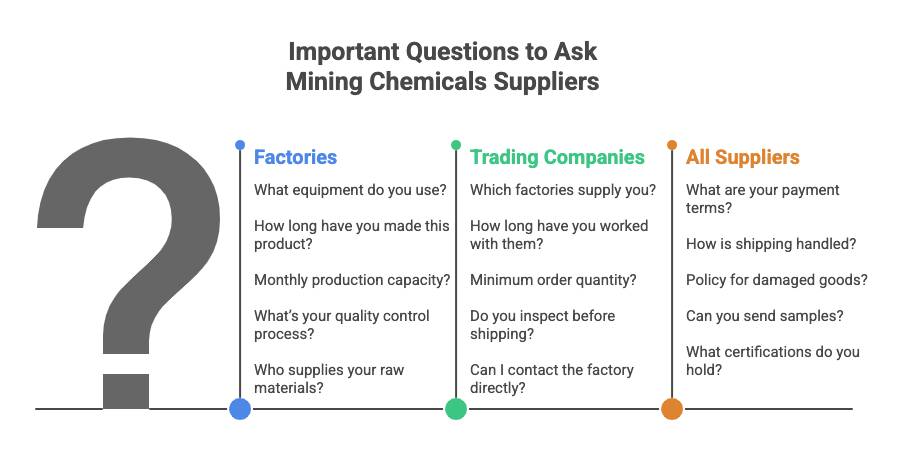
(These are the important questions to ask when verifying mining chemicals suppliers.)
If They Claim to be a Factory:
- "What specific equipment do you use to manufacture [chemical name]?"
- "What's your monthly production capacity for this product?"
- "Who are your raw material suppliers?"
- "How long have you been manufacturing this chemical?"
If They Claim to be a Trading Company:
- "Which factories supply this chemical to you?"
- "How long have you worked with these suppliers?"
- "Can you provide your suppliers' factory contact information?"
- "Do you inspect products before shipping to customers?"
https://www.youtube.com/shorts/2ZZYrP5VwCM
Universal Questions (Ask Everyone):
- "What are your exact payment terms?"
- "What happens if products arrive damaged?"
- "Can you provide product samples before we order?"
- "What certifications do you have for this product?"
Red Flags in Responses:
Vague answers about equipment or suppliers
Refusing to provide supplier information (for traders)
Unclear responses about certifications
Pushing for immediate large orders without any samples
WhatsApp Us for Free a Consultation
3. Document Verification
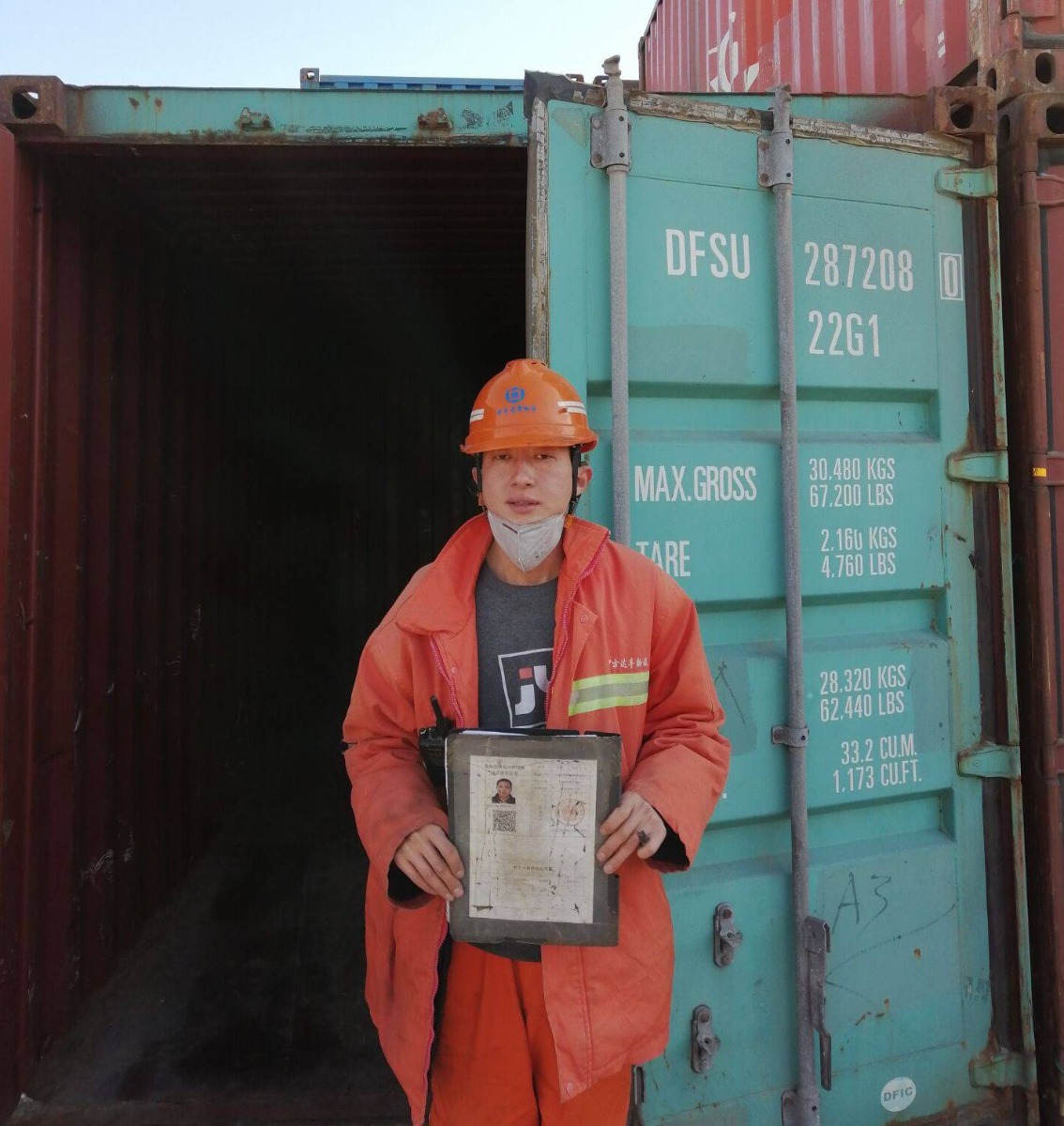
(Camachem employee holding certificate for clearance)
Step 4: Request These Core Documents:
- Business license (all suppliers)
- Export permits for chemicals
- Quality certifications (ISO, SGS, COA, MSDS)
- Insurance documentation
Step 5: Verify Documents Are Real
- Check business registration on gsxt.gov.cn (use Google Translate)
- Verify certification numbers on issuing body websites
- Ensure document dates are current (not expired)
- Look for consistent company information across all documents
Ignore Fake/Unreliable Documents:
- Website testimonials (easy to fake)
- Certificates without verification numbers
- Documents that can't be independently verified
4. Live Verification
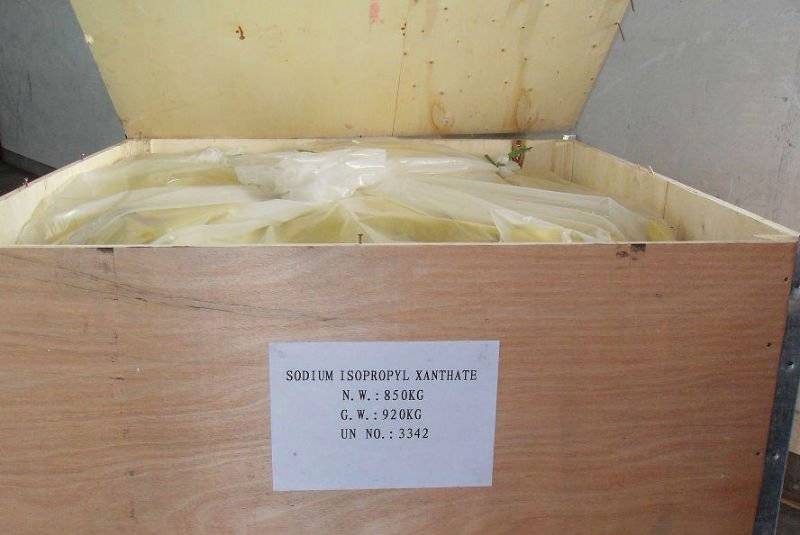
(Live verification of mining reagents at Camachem’s warehouse.)
Step 6: Mandatory Video Call
For Factories - Must Show Live:
- Production area with equipment running
- Raw material storage
- Company name visible on building/signage
- At least 2-3 staff members working
For Trading Companies - Must Show:
- Their office space
- Warehouse with inventory
- Staff working (not empty office)
- Inventory management system
Important: Schedule calls during Chinese business hours (9 AM - 6 PM Beijing time). If they can't do video calls, that's a major red flag.
https://www.youtube.com/shorts/hhyiWbEWb9I
5. Reference Check

(Partnerships built on trust — Camachem hosting dinner with valued customers.)
Step 7: Verify Their Claims
For Factories:
- Ask for 2-3 customers who have visited their facility
- Request references for similar chemical products
- Verify production capacity with existing customers
For Trading Companies:
- Get references from their factory suppliers
- Ask for customer references from similar trades
- Verify their supply chain experience
Step 8: Contact References
- Call/email references directly (not through the supplier)
- Ask about quality, delivery times, and reliability
- Verify the supplier's claims about capacity/experience
6. Test & Decide
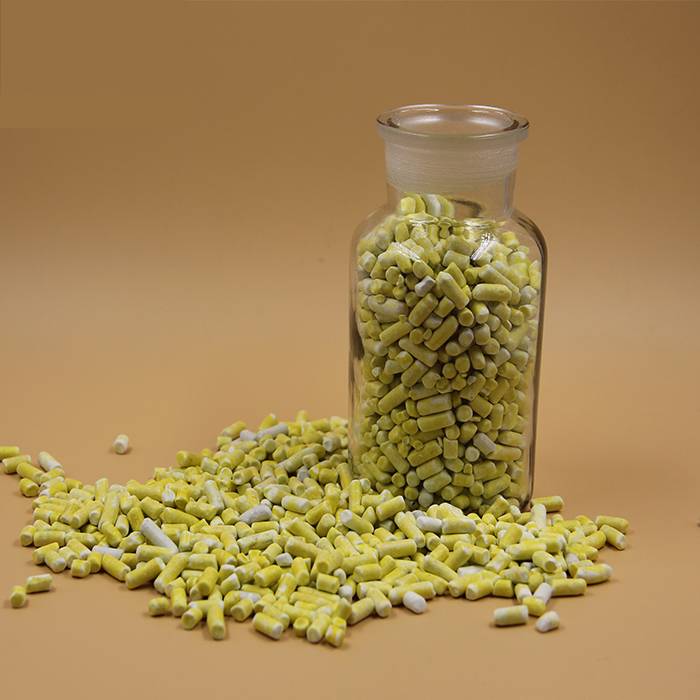
(Test the mining chemical samples for quality.)
Step 9: Small Test Order
- Order minimum quantities only
- Never pay all money upfront
- Test delivery timeframes
- Verify product quality matches samples
- Check all shipping documentation
Step 10: Final Decision Checklist
✓ Business registration verified independently
✓ Documents confirmed as genuine
✓ Video call completed successfully
✓ References contacted and verified
✓ Test order delivered as promised
✓ Product quality meets requirements
Only proceed with larger orders after ALL boxes are checked.
Use this process to verify Chinese mining chemicals suppliers to save thousands in losses.
Part 4: Take Action
Conclusion: Stay Safe and Don't Fall for Cheap Prices
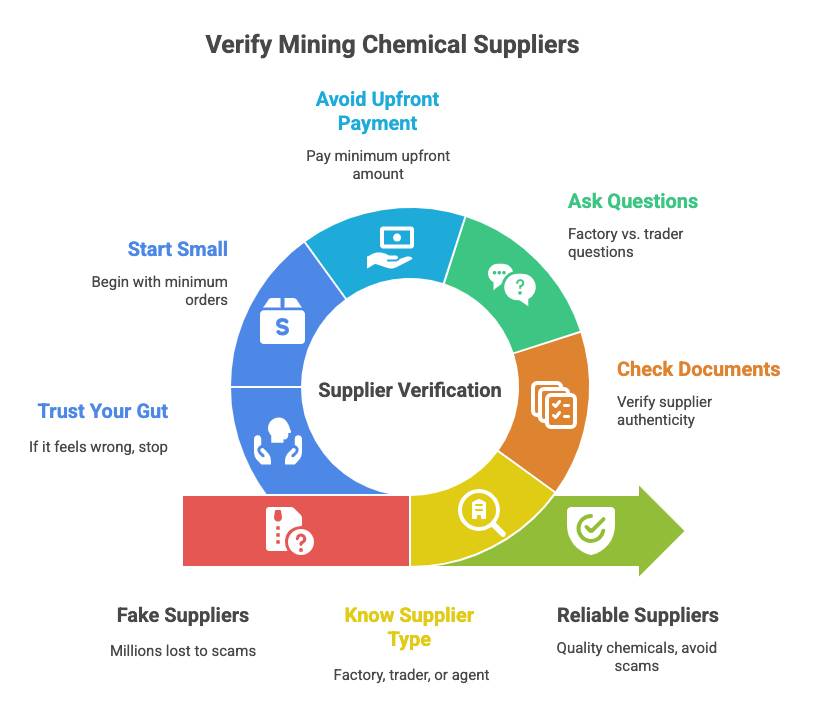
(Real mining chemicals cost real money. Verify before you trust cheap prices.)
Fake suppliers cost mining companies millions every year. But now you know how to spot them.
Remember the key points:
- Know what type of supplier you're dealing with
- Check appropriate documents for each type
- Ask the right questions for factories vs traders
- Never pay all money upfront
- Start with minimum quantity orders
- Trust your gut if something feels wrong
Real Chinese suppliers provide quality mining chemicals, and that costs money. Avoid anyone offering deals that seem too cheap; most likely they are scammers trying to steal your money.
Whether you're working with a factory, trader, or agent, use this guide every time you look for new suppliers. Don't rush. Take your time to check your supplier properly. It's better to be safe than lose thousands of dollars.
Your business depends on good mining chemicals suppliers. Now you know how to find them and verify them correctly without leaving your office. Start using these tips today. Your future self will thank you.
Ready to find reliable mining chemicals suppliers? Start using this verification process today to protect your business and avoid scams.
WhatsApp Us for Free a Consultation
Don't Have Time to Verify Too Many Suppliers Yourself?
(Details to contact Camachem for high quality mining chemicals)
Mining companies worldwide trust CAMACHEM, a subsidiary of CAMAL Group, for all their mining chemical needs. Here's why:
- Easy Communication: We provide seamless English support that big Chinese factories simply can't match
- Scam-Free Experience: Zero scam risks with our 10+ years of Chinese market experience and strict supplier checks
- High-Quality Chemicals: Strong supplier relationships ensure consistent quality
- Greater Control: Strategic investments in key facilities give us greater control over quality
- End-to-End Supply Handling: Complete supply chain management handled for you
- Best of Both Worlds: Factory quality reliability with personalized trading service
- One-Stop Sourcing: Through our group’s other subsidiaries like CamaMach (equipment) and CamaSteel (steel), we provide more than chemicals — making us your single partner for all industrial needs.
- Reliable Results: High-quality chemicals delivered every single time
How Camachem Helps You Get Quality Chemicals from China
✅ Do you spend too much time trying to find quality chemicals in China?
✅ Is it hard to explain your needs to Chinese suppliers?
✅ Do you need customized chemicals that regular suppliers can’t deliver?
✅ Do you want help getting the right chemicals, so you can focus on growing your business?
If your answer is YES, Reduce Your China Sourcing Headaches, WhatsApp Us (Faster) for a FREE Consultation
✅ Camachem: Quality Chemicals. Every Single Time. ✅
Frequently Asked Questions About Mining Chemicals
1. What chemicals are used in mining?
Common Chemicals in Mining Operations
Mining operations use a wide range of chemicals depending on the type of mineral being extracted. The most common categories include:
- Metal extraction chemicals – cyanide (for gold and silver), sulfuric acid (for copper), and solvents to separate minerals from ore.
- Explosives – ammonium nitrate with fuel oil (ANFO) and nitric acid for blasting rock and tunnels.
- Heavy metals – mercury, lead, and uranium, which can be released during mining and are highly toxic.
- Fuel and equipment chemicals – diesel, gasoline, exhaust fumes, lubricants, and hydraulic fluids used in machinery.
- Processing aids – flotation chemicals and pH adjusters to improve mineral recovery.
These chemicals are essential for mineral extraction and processing but can also cause serious environmental and health risks, such as water contamination, soil damage, and air pollution, if not carefully managed.
2. What are the 4 types of mining?
The four main types of mining are:
- Surface mining – removes minerals found close to the Earth’s surface, often using open-pit or strip mining methods.
- Underground mining – extracts deeper mineral deposits through tunnels and shafts.
- Placer mining – recovers valuable minerals like gold from riverbeds or stream sediments.
- In-situ mining – dissolves minerals underground and pumps them to the surface for processing.
Each method is chosen based on the depth, location, and type of mineral deposit, as well as environmental and economic factors.
3. What chemical is used in gold mining?
The main chemical used in gold mining is cyanide, usually in the form of sodium cyanide or potassium cyanide. It is highly effective at separating gold from crushed ore by forming a water-soluble compound, a process known as cyanidation or the cyanide process. While cyanide allows efficient recovery of even low-grade gold deposits, it is extremely toxic to humans, wildlife, and ecosystems if not carefully managed. For this reason, modern gold mines must follow strict safety and environmental regulations when handling and disposing of cyanide.
4. Which country has the largest mining industry?
|
Rank |
Country |
Why It’s Big |
Evidence |
|
1 |
China |
Produces the most minerals overall (coal, rare earths, metals). |
USGS (2023) – China is the top producer for 18 major minerals. (USGS) |
|
2 |
Australia |
Biggest in export value (iron ore, gold, coal, bauxite). |
Australia’s mining exports were worth A$455 billion in 2022-23. (Oregon Group) |
|
3 |
Russia |
Major producer of coal, diamonds, and precious metals. |
Listed among top producers in USGS global mining data. (USGS) |
|
4 |
United States |
Strong in coal, copper, and industrial minerals. |
USGS reports high output of coal and non-metallic minerals. |
|
5 |
Brazil |
Leading exporter of iron ore and bauxite. |
Vale (Brazil) is one of the world’s largest iron ore producers. |
5. What are the solvents used in mining?
Solvents in mining are liquids that help dissolve or separate metals from rock. Common examples include:
- Organic solvents – like kerosene or alcohol-based liquids, used to recover metals such as copper, nickel, cobalt, and uranium.
- Acidic solvents – such as sulfuric acid and hydrochloric acid, which help pull metals like copper and rare earths out of crushed rock.
- Ammonia-based solvents – used in some processes to extract copper and other base metals.
- Special chemicals (extractants) – for example, tributyl phosphate or oximes, which are designed to attach to certain metals during processing.
These solvents make it easier to separate valuable metals, but they can pollute soil and water if not handled safely.
6. Which chemical is used to purify gold?
Chemicals used to purify gold include:
- Cyanide (sodium cyanide or potassium cyanide): The most common chemical, used in the cyanidation process to dissolve and extract gold from ore.
- Aqua regia (nitric acid + hydrochloric acid): Strong acid mixture used in laboratories and small-scale refining.
- Chlorine gas: Used in the Miller process to remove impurities from molten gold.
These chemicals are very effective but also highly toxic, so they must be handled with strict safety controls.
7. What is Sulphuric acid used for in mining?
Sulphuric acid is mainly used in mining to:
- Dissolve metals like copper, nickel, and uranium so they can be taken out of ore.
- Help process ore by separating valuable minerals from waste rock.
- Control acidity during mineral processing.
- Treat mining waste before it is released to the environment.
It is very useful but also dangerous, so it must be handled with care.
-
What is the Difference Between Caustic Soda Pearls and Caustic Soda Flakes? (2026 Update)
June 8, 2026
-
Top 10 Caustic Soda Suppliers in Australia [2026]
 June 8, 2026
 -
Frequently Asked Question about Phosphoric Acid
June 8, 2026
-
Zinc Chloride: 5 Hazards and Safety Measures You Need To Know
June 4, 2026
-
10 Things I Need To Know About Zinc Chloride (2026 Update)
June 4, 2026