

 Arabic
 French
 Indonesia
 Portuguese
 Russian
 Spanish
 Vietnamese
 +86-157-2476-6919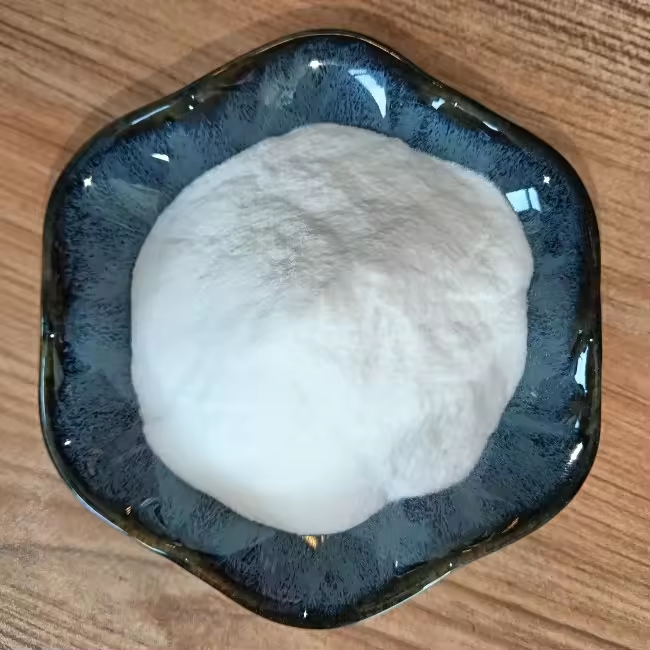
Ethylene-Vinyl Acetate Copolymer
Other Trading Names:
- RDP/VAE
CAS Number: 24937-78-8
HS Code: 39013000
Types of Packaging:
- 25kg drum
- 25kg bag
Inquiry
 $100.00
$100.00
Availability:
In stock
SKU
Ethylene-Vinyl Acetate Copolymer
|
Appearance |
white powder, free-flowing |
|
Solid content |
≥98.0% |
|
Ash content (1000℃) |
12%±2 |
|
Bulk density |
400−550 g/l |
|
Average particle size |
~80 μm |
|
PH value |
5.0-8.0 |
|
TG(Glass Transition Temperature) |
16℃ |
Chemical Description:
- Ethylene-vinyl acetate (EVA) copolymer is a type of plastic made by combining ethylene and vinyl acetate monomers.
- The copolymerization process involves polymerizing ethylene and vinyl acetate in varying proportions to achieve different properties.
- EVA copolymers typically contain between 10% to 40% vinyl acetate by weight.
- The vinyl acetate content in EVA significantly affects its properties, such as flexibility, toughness, and clarity.
- Higher vinyl acetate content in EVA results in increased flexibility and clarity, making it suitable for various applications.
- EVA copolymer exhibits excellent impact resistance, making it durable and resistant to physical stress.
- This copolymer has good adhesion properties, allowing it to bond well with various substrates.
- EVA is known for its good low-temperature properties, maintaining flexibility even at cold temperatures.
- It has a relatively low melting point, which facilitates easy processing and molding.
- EVA copolymers are resistant to UV radiation and environmental degradation, enhancing their longevity.
- The material is also resistant to chemical exposure, including oils and solvents, making it versatile for industrial uses.
- EVA copolymer is commonly used in the production of flexible packaging materials, such as films and bags.
- It is widely utilized in the footwear industry, particularly in the production of soles and padding due to its cushioning properties.
- The copolymer is used in the manufacture of hot melt adhesives, offering strong bonding and quick setting times.
- EVA is employed in the production of medical tubing and pharmaceutical packaging due to its biocompatibility and clarity.
- The solar industry uses EVA copolymers as encapsulants in photovoltaic modules, protecting the cells from environmental factors.
- In the automotive sector, EVA copolymer is used for seals, gaskets, and interior components because of its durability and flexibility.
- EVA is also found in various consumer products, including toys, sports equipment, and household items, due to its safety and versatility.
- The material can be easily colored and printed on, allowing for aesthetic customization in consumer goods.
- EVA copolymer is known for its lightweight nature, contributing to its widespread use in applications where weight reduction is crucial.
- It exhibits good mechanical properties, balancing flexibility and strength for diverse uses.
- EVA can be processed using various techniques, including extrusion, injection molding, and blow molding, offering manufacturing versatility.
- The copolymer can be recycled, aligning with environmental sustainability efforts.
- Due to its thermoplastic nature, EVA can be re-melted and reformed multiple times without significant degradation of properties.
- EVA copolymers can be modified with additives to enhance specific characteristics, such as flame retardancy or increased hardness.
- The material's versatility and adaptability make it a valuable component in numerous industrial and commercial applications.
- EVA copolymer combines the beneficial properties of both ethylene and vinyl acetate, resulting in a material with unique and desirable features.
Write Your Own Review
X